Friday, 28 February 2014

Burlington Transit releasing June report card

http://www.thespec.com/news-story/4390870-burlington-transit-releasing-june-report-card/
Feb 28, 2014  

Burlington Transit releasing June report card
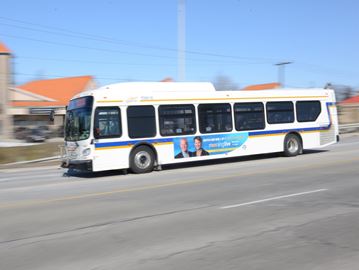
Burlington Post
Burlington Transit will be presenting a six-month report card to councillors in June about the impact of the changes to the city’s bus system that took effect Nov. 3, 2013. 

The news came during a transit update presented last week to the Community and Corporate Services Committee during the first day of budget deliberations. 

The report card will be based on transit performance indicators. 

“We’re here to build a solid, reliable transit service,” said Mike Spicer, transit director. “We want to base it upon the rider experience, because without the rider making that experience positive, we’re not going to succeed. We need to also continue to ensure our buses can be utilized in the most efficient and cost-effective manner.” 

Burlington Transit has documented approximately 270 concerns in November and December 2013 in relation to the service changes that were implemented last fall. 

Among the top concerns were longer commutes/wait times (50 complaints), Route 10/20 transfer (38), dissatisfaction with changes (28), buses not entering Mapleview Centre property (14) and difficulty reading the new Ride Guide (11). 

Spicer said based on a monthly ridership of approximately 175,000, the complaints came from approximately 0.7 per cent of transit users. 

The transit director said there was also positive feedback, including Route 15 has better service (15 comments), better connections on Route 21 (14), better connections at Burlington GO and Appleby GO stations (18) and great service on Route 48 (14 comments). 

The latest transit report did not sit well with delegates who addressed committee last week.
Susan Lewis, a Ward 3 resident, said she was concerned about the volume of complaints made to Burlington Transit since the Nov. 3 service changes. 

“With about 300 complaints in the first two months, there’s obviously a huge problem occurring in the here and now,” she said. “To address it sometime in the future while allowing all these problems to fester is only going to add to the growing frustration that I’m seeing on the street.” 

Doug Brown, chair of Burlington for Accessible Sustainable Transit, labelled the Nov. 3 changes a ‘rob Peter to pay Paul’ situation. 

“In the case of the interim service plan, Peter turned out to be the northeast Burlington, Paul turned out to be the Fairview corridor,” he said. “We really need to consider everybody. This transit system needs to serve the whole community.” 

Ward 5 resident James Smith went one step further, suggesting the city issue a request for proposals (RFP) for a new transit provider. 

“I honestly think that perhaps council should consider giving up on transit – that we should take the money that we do now, put out an RFP, have Oakville Transit, Hamilton Street Railway, Metrolinx, somebody, a private individual, take up the slack…,” he said. 

Spicer said the changes made to the transit system on Nov. 3 were appropriate. 

He pointed out boardings per hour have increased since the changes took effect in comparison to January-October 2013, specifically identifying growth in boardings per hour on Routes 10, 101, 1, 6, 4 and 15.
The bar graph chart comparing November-December 2013 and January-October 2013 data on Routes 10, 101, 1, 4 and 15 shows increases of approximately 1-5 boardings per hour since the changes came into effect. 

He added new Route 48 Millcroft, which provides weekday morning and afternoon service between Corpus Christi and Frank J. Hayden secondary schools, is very successful with close to 50 boardings per hour.
Spicer said last month saw the boardings per hour grow further on a number of routes. 

“We needed to take our baseline service and we needed to create a network that gives us solid base service so we can provide growth from there and we think we’ve accomplished that with the changes we’ve implemented in November,” he said. “Now our growth strategy will come and our growth strategy will be an aggressive plan on how we are going to improve the modal split... There will be a business plan in order to support that growth.” 

Spicer said the Canadian average for municipal public transit has a revenue-cost ratio of 55 per cent, with the average municipal operating cost per capita at $105.69. Provincially, revenue to cost ratio is 63 per cent, with a municipal contribution of $92.21 per capita for public transit. 

In 2012, Burlington operated 51 buses, had a revenue-cost ratio of 39 per cent and a municipal operating cost per capita of $43.17. 

That same year, Oakville operated 90 buses with a revenue-cost ratio of 34 per cent and a municipal operating cost per capita of $71.95. 

The next steps for Burlington Transit are connecting Routes 10 and 20 to remove the need to transfer, working with DeGroote School of Business on a survey about possible changes to Routes 10/20/40, negotiating with Mapleview Centre for bus priority and preparing a growth strategy to increase service to under-utilized, low-performing areas. 

Burlington Transit is also implementing smart bus technology, which will give riders up-to-the minute information about the city’s transit system, this year. 

The transit report that went before committee last week included two options, but no recommendations, for transit service changes. 

Scenario A was an increase in frequencies during off-peak service hours at a cost of $693,003, which includes $481,528 for annual human resources costs for operators and $211,475 in annual operating cost.

Scenario B for an increase in overall service including frequencies and routes was also presented at a net cost of $2,858,530, including $1,084,592 annual human resources costs for operators, $548,938 in annual operating costs, $1, 470,000 in capital costs for bus purchases. Annual revenue is expected to be $245,000.

Neither Option A nor B was put on the table by councillors at last week’s meeting. 

Mayor Rick Goldring responded higher investment in the system isn’t necessarily the answer, adding he wanted to see the transit report card results in June before making any changes. 

“We’re trying to do the best and create the best transit program for the dollar investment…,” said Goldring.
"Oakville spends over twice as much as we do in Burlington on transit and they only had 25 per cent additional ridership. Is that a good investment? I think we’ll have that discussion further after the six-month report. Very clearly we have to give this new system the opportunity to be measured effectively and we have to give people who may have been inconvenienced somewhat time to get used to the new changes.” 

During last Thursday’s deliberations, Ward 2 Councillor Marianne Meed Ward proposed altering Route 5 Francis-Downtown to return service along Ontario Street. 

The motion failed 6-1, with Meed Ward the lone vote in support. Some of her colleagues around the table suggested they’d like to see the June transit results before making any route changes at this point. 

The next, and likely final, day of budget deliberations on Tuesday, March 3 includes a budget amendment proposed by Meed Ward that the John Street Terminal in downtown Burlington not be closed. Closing the terminal is proposed in the 2014 budget to cut $8,060 from transit’s base budget. 

(3) Comments

By Judy | MARCH 01, 2014 12:48 AM
The recent changes were made by someone who never uses the bus. A requirement for making the schedules & routes should be that the person give up their car for a month. I bet they won't last a week with the current routes & times. There should not be half hour service in the winter. It takes 2 or more buses now to get any where and the transfers miss each other by minutes so you have to stand in the cold for 25 minutes. There is hardly any service in the downtown area. Buses don't meet at the Go station or the terminal. I used to ride the buses 2 or 3 times a week but now only once out of necessity. Definitely not a service for seniors!

By DrMerkwuerdigichliebe | FEBRUARY 28, 2014 10:55 PM
Flawed system. Waste of taxpayer money. Fix the mistake -- scrap BT now! Burlington DOES NOT NEED a public transit system that NO ONE uses.
 
By Henry | FEBRUARY 28, 2014 06:25 PM
The recent changes were poorly communicated and poorly thought through. Removing the buses from inside the Mapleview lot is a disaster for seniors. The transit route changes have meant that several people I know no longer use transit. However, staff and council move glacially to rectify the problem - because none of them rely on the service.


Thursday, 20 February 2014

Feb. 20, 2014 Delegation re Nov. 3, 2013 Route Changes

Susan Lewis re Agenda Item 3

With about 300 people upset enough to complain to the City, there’s obviously a huge problem occurring in the here and now. To address it sometime in the future while allowing all these problems to fester is only going to add to the growing frustration so many people are experiencing.

For the first time, I have heard 2 people talk about selling their homes and moving out of Burlington. They have lost confidence that eventually Burlington will have a workable transit system. If that happens, statistically each house, now occupied by one senior, would be bought by a family with 1.7 cars, thus adding to the road congestion.

Bus Signage:
Tourists, visitors and new transit users are finding the bus signs very confusing. We used to have a “Brant North” bus that traveled up the whole of Brant Street from the terminal to Cavendish Drive. Going in the other direction, it was then called the “Brant South”. It was simple and easily understood. Now, we only have a “Brant North” bus. I’ve had to assure people that even though the bus says “North” it is actually going south, on the return trip. (They think it might veer off and go north again.)

Bus Schedule:
The schedule was very simple and now it has become quite complicated. For my bus, the #2, all I needed to know was my bus left the stop that used to be “Autumn Hill & Driftwood” but is now renamed “Guelph Line & Coventry Lane” every half hour at :24 and :54. During rush hour, we used to have 15 minute service in the middle of the half hour. (:39 and :09) Now, the 15 minute and half hour service is gone and it’s every 12 to 26 minutes during rush hour. It is actually every 20 minutes between 10:00 a.m. and 3:30 p.m.

If a person wants to continue south along Brant from the Burlington GO Station, they need to be on the #3 “Guelph Downtown” bus or the #5 Francis Downtown bus. So, when you get to the GO Station, you may or may not have to change buses. Sometimes the “Brant North” becomes the “Guelph Downtown” and sometimes it doesn’t. It’s not written in the bus schedule so you’re told to ask the driver. Twice I have asked a driver if they become the #3 and they said they didn’t know because they were going off shift at the Go Station. The same problems exist for the #3 “Guelph Downtown” as well.

It used to be easy to get home from the downtown. All the buses left the Downtown Terminal on the hour and the half hour. During rush hour, they ran every 15 minutes. I could get home using the #2 North or the #3. Now, various buses come and go at different times making transferring difficult. I used to prefer to shop downtown and I used to come downtown every Wednesday but I don’t do that anymore because I haven’t figured out the best way to get home at different times of the day. Traveling and shopping is now easier if I can avoid going south of the Burlington GO Station. Too often I have to sit on a bus at B GO for 15 minutes or so making what was a half hour trip into a three quarters of an hour trip and I may or may not have to transfer buses.

Before November 3rd, the #2/#3 bus ran in a circle all day. I could take the 2 North and it would become the 3 South at Coventry and Guelph Line and then continue along Guelph Line. Now, it might and it might not. As far as I can tell, most of the time it doesn’t.

Suggestion:
I would like to suggest that you start untangling this by restoring at least the #2/#3 back to its original route of a complete circle for most of the day while keeping the part of the schedule that services the 407 Carpool during rush hour. I am concerned that if the City “collects more data” and then realizes that they’re going to have to fix their mistake by putting more money into transit, it will be too late to do anything because the budget will have been passed. If that happens, we’ll have to wait until sometime in 2015 before we can address it. If there are not enough buses to go around presently, maybe you could rent one from Hamilton to see us through.

I do think we all agree the November 3rd problem will be fixed it’s just a matter of when. I would say that in this case, with so many complaints, timing is everything.

Closing:
I’ve also heard it said that some buses run around the City half empty. I see the bus as half full which means that many more cars are off the road. A bus takes up 2 car spaces of road in traffic and doesn’t require a prime parking space. If that bus is half empty, or carrying 20 people, that’s 20 cars not adding to the traffic jam. That’s a success story. Even if the bus only has 4 or 5 people on it during part of its trip, that still less traffic.

I wouldn’t ask anyone here to get on a bus themselves but I would respectfully request that you just get a bus schedule and look for yourself as to how you would get from your house to work and then back home each day. You would then see the new schedule and our bus system from a tourist’s or a new user’s point of view.

Transit rider advocacy group want John street terminal kept and a better deal for those who use the bus as well.

http://www.burlingtongazette.ca/transit-rider-advocacy-group-want-john-street-terminal-kept-and-a-better-deal-for-those-who-use-the-bus-as-well

By Pepper Parr
February 20, 2014
BURLINGTON, ON
Doug Brown knows more about what Burlington hasn’t managed to do with its transit service than anyone else in the city.  He has personal files that cover more than 25 years of transit history.  He brings a strong personal commitment to public transit and can tell you how difficult it is to get about not only the city but the Region if you rely on public transit.
Doug Brown and Susan Lewis look over a 1982 copy of the city’s bus schedule.
They called the bus schedule the Digest in 1982 – a time when Burlington had 18 bus routes and a schedule that fit on one large piece of paper. The current bus schedule is 28 pages long – many of the bus drivers don’t understand the thing.
We met with Doug Brown and Susan Lewis to talk about the delegations each of them had made to the Community and Corporate Services Committee Brown brought along a copy of the 1982 transit schedule – which at that time was called the Burlington Digest
Last year Brown and a group known as Bfast , Burlington for Accessible Sustainable Transit, made presentations to the Standing Committee that was reviewing the budget for 2013. In their presentations, they presented what they believed was clear evidence that Burlington had continually underfunded transit.  They presented the findings of consultants reports, and compared Burlington’s capital and current transit budgets against peer communities (the same communities used in the City’s budget report to compare tax rates). Bfast had hoped the City would carefully weigh the facts and either make some adjustments to the transit budget, or explain to them why they should not be influenced by the facts. To the dismay and disappointment of the Bfast people Committee members had no questions for the delegation, and adopted none of the recommendations.
Bfast hoped the committee reviewing the budget for 2014 would follow the guidelines in the recently adopted Engagement Charter and give citizens meaningful involvement in the budget process. We expect Council and staff to “walk the talk”.
Bfast was of the view that 2013 witnessed a step backwards for transit in Burlington.  Despite some restoration of operating funds in the operating budget, there were many route changes which riders found confusing, resulting in reduced service on some routes. Also, the 8.4% fare increase, which was not supported by any analysis or staff report, resulted in Burlington Transit riders paying fares even higher than Toronto’s TTC. Transit users were not consulted about any of these changes. The net result is widespread dissatisfaction with Burlington Transit and a loss of riders from both actions.
In 1982 there were a number of ticket agents throughout the city. Today there is one bus terminal which the transit people want to close; the public would have to troop over to city hall to buy a ticket. City hall closes at 4:30 pm – never opened on weekends.
The 2014 budget does not increase the City’s investment in its transit system. The fulfillment of Burlington’s Official Plan and Strategic Plan require significant additional investment in transit.  ROPA (Regional Official Plan Amendments) 38 requires that the transit modal share go from its current 2% to 11% by 2031. This will require an average annual increase in ridership of 10%.
The growth of transit in Burlington requires a long-term plan and funding commitment. The ongoing Transportation Master Plan is an opportunity to develop a long-term transit plan, however, we have been advised by Transportation Department staff that the Transportation Master Plan will not do this. Since the termination of the Transit Master Plan in January 2012, the City has lacked any long-term transit plan.
The budget according to Bfast, continues to treat transit in isolation to the other parts of the City’s transportation system (roads, parking, and active transportation). The majority of the capital budget is for roads, (increasing in 2014 to 54% from 51% in 2013), while transit’s small share of the capital and current budgets does not even get shown in the budget pie-charts.
During the 2013 budget deliberations Bfast we recommended the City look at traffic demand management (TDM) as a means of reducing the very costly widening of roads and intersections in the 10 year capital budget.  In the case of the Appleby/Harvester EA, we have been told by the project engineer that TDM was not being looked at or considered.
There are some budget items that reflect the City’s low priority for its transit system.
We note that the funds approved in the 2013 capital budget for transit priority measures ($100,000 for 2014) have been quietly removed from the 2014 budget.  Transit priority measures should be part of the Transportation Master Plan and the current Appleby/Harvester intersection plan, as such measures will reduce the car traffic and forego the need for expensive road widening.
Bus Cleaning:  It is not clear what is being proposed or if more or less money is required. Bfast fears  that that the City may be considering a lower standard of cleaning for the buses. This would be unfair to both drivers and passengers, and sends a wrong message to current and potential transit users.  However, Bfast does support the proposal to have the cleaning done by city staff rather than by external contract provided bus cleaning is not compromised.
There was a time when the car did not rule and the transit department saw bus service as something that was vital.  The marketing people certainly took a different approach.   Imagine something like this coming out of the transit department today?
Back-end loading of transit in 10-year capital budget. Bfast points out that  75% of bus purchase expenditures occur in 2018-2023 and only 25% occur in 2014-2017. Similarly, a large proportion of bus stop location upgrades and bus shelter expenditures occur in 2018-2023.   
To be fair, the city has said it will be doing a total revision of the current capital budget –so anything in that budget beyond this year has to be seen as something that will be getting a very close look.  Bfast might want to begin developing its own long term capital plan and prepare to take that to the city.
It appears that the City is planning to close the Downtown Terminal on John Street which Bfast describes an important place of shelter, information, tickets, and washrooms for passengers and drivers. While not a major budget item, the Downtown Terminal is very important to transit users and for the development of a walkable, liveable downtown.  Ward 2 councillor Marianne Meed Ward has said she will be speaking very strongly for the retention of the John Street terminal.
Bfast argues that city council has not yet seen a detailed business case for the closing of the terminal downtown and more significantly, neither the general public nor transit users have yet seen a business case for the closing of the terminal.   Bfast adds to that the  Official Plan process that  is holding meetings on potential mobility hubs with the downtown as one of four such mobility hubs.  One of the fundamental parts of a mobility hub as defined by the City’s Official Plan process and Metrolinx is that they contain a transit terminal.  Further, the Master Transportation Plans is integrating all modes of transportation including transit and at this point we do not know how that plan will deal with transit and the downtown terminal. 
If there was ever a place to locate a transit terminal – that would be John Street where the only terminal in the city is now located. Transit department is recommending it be removed and tickets sold at city hall. Ward 2 Councillor Marianne Meed Ward isn’t buying that business case
Bfast suggests this Council is not in a position to determine whether a downtown transit terminal may indeed be a necessary part of an effective transit system that can grow and serve the public effectively in the long run.   Any decision to close the downtown terminal now to obtain efficiencies which translate to only $16,000 annually might create long term problems and cost the City far more if the City then has to re-introduce a terminal in the downtown.  Bfast is recommending that the future of the downtown terminal be deferred until the Council is more clear on the direction of the Mobility Hub concept re the downtown and the Master Transportation Plan ideas re transit in the downtown.  Further, Council needs to direct staff to consult with transit users and the public regarding a possible closing of the terminal.
In their remarks to the committee hearing budget delegations Bfast points out that the 2014 capital budget does include a major investment ($3.4M) in street-scaping in the area of the Downtown Terminal.  Surely, this is an opportunity to redevelop the present “kiosk” into a first-rate terminal facility.
There are parts of the transit portion of the budget that confuse Doug Brown, part of the Bfast committee.  Referring to a part of the budget about Restoring Transit Services, Brown says “it is unclear exactly  what is meant by the item, we haven’t seen the separate report referred to in the Budget document. It would be logical to assume that the Restore Transit Services item comes from the lost capital revenue from changing the federal gas tax funding from a 70-30 split to 80-20. ($500,000 for two years gives $1,000,000).  This shouldn’t be regarded as an additional funding option since the funding is already there, just diverted to roads. 
Bfast believes Burlington Transit needs to put money into new, (replacement and additional), buses, more shelters, real-time schedule information online and at bus stops, and, more marketing.  
When Burlington created its first really relevant Strategic Plan it had no idea how readily the citizens would take to the document.  There are very few delegations made that don’t refer to the document.  Bfast puts a firm grip on the making Burlington “a walkable, liveable community”.  Brown points out that this view has been reinforced by some thoughtful presentations at the bat the Mayor’s Inspire Series where Christopher Hume and Gil Penalosa spoke.   Brown wants to see at least some of the ideas that were brought to the city adopted.  If we aren’t going to pay any attention to the experts we bring to Burlington to talk to us – then why bother bringing them?, asks Brown.
Dan Burden, an urban planning expert, was engaged by the City to “set the tone” for the Transportation Master Plan. Burden recommended the City create narrower streets to create street life and make the streets safer and more useable by pedestrians and cyclists.
However, the 2014 Budget includes very large expenditures for widening the roads and intersections         ($21M for Walkers Line & North Service road and $23M 10 yr. total for Harvester – Appleby to Guelph Line) while, transit, sidewalks, and safe cycling facilities have been underfunded.
Doug Brown, chair of Bfast, wants to see a bus schedule with routes that work for people and not the current bus route set up in place. It doesn’t work claims Brown. Susan Lewis, who does not drive looks on. There are places she just cannot get to in the city because transit doesn’t work – at least not for her.
Brown makes a point that many make on the budget review process Burlington has in place. “Public input on the Budget has again come at the 11th hour, when large changes to the budget are not possible. We encourage the City to provide their citizens with a much earlier opportunity to help shape the budget in the future.”
Doug Brown is chair of Bfast.  He brings degrees in science and engineering to the volunteer work he does.  What boggles a lot of people is that Brown isn`t used by the city as a significant source of information and advice.  Doug Brown was riding the bus in Burlington before the current Direct of Transit Mike Spicer even got to this city.
The city has an asset it needs to consider leveraging.
There is a lot more to be written about transit and how people like Susan Lewis get around in the city.  Let’s see what city council decides to do with the current transit budget.

9 comments to Transit rider advocacy group want John street terminal kept and a better deal for those who use the bus as well.

  • Roger
    I applaud Mr. Brown and his organization on their efforts – I am always hopeful that our decision makers (see present council)will make good decisions. My faith has been misplaced – present transit is a shadow of what it was and significant parts of the city are either not serviced or underserviced. Rick Goldring is on record in from of the Chamber of Commerce telling people that business people (suits) do not take transit – I beg to differ – please see thousands of people Burlington’s 3 GO stations getting on the train to Toronto. The city’s transit committee (BTAC) has not had a meeting in 7 months – how serious is a city about transit when it’s own committee has not met in 7 months. Most Councillors are on the record saying that transit does not work for them or they just do not like taking the bus – how can one expect transit to get any better when the decision makers have such a low opinion of transit in their own city. Remember these are the people including staff who thought is was okay to remove rides for the CNIB and ARC industries . Council has failed to on transit – We are the only city in the GTHA to spend more on roads then transit. The facts speak for themselves
  • Susan Lewis
    Up until the new schedule of Nov. 3, 2013 you could easily commit your bus schedule to memory and “then burn your car”.
    My route, the #2 ran every half hour for most of the day and every 15 minutes during rush hour. (In 1982, it ran every 15 minutes until 7 p.m. then every half hour.) For over 30 years it was easy peasy.
    Now, it runs every 12 to 26 minutes during rush hour and if you try to go south of the B Go, you may or may not have to transfer buses. The schedule doesn’t tell you, you either ask the driver or find out when you get there. It’s more complicated than that but your eyes would start to glaze over if I mentioned any more of the changes on this one route alone. It’s not just this route that’s become difficult, it’s other routes as well. The City took a bus schedule that was very simple and made it quite complicated. (Doesn’t anyone remember the meaning of K.I.S.S.?)
    It’s a bad idea to close the downtown terminal especially if it appears to save only $16,000. on a $200 million dollar plus budget. I say “appears to” because the City recently spent money to refurbish it and if they close it, they will have to build new washrooms from scratch at the Burlington GO Station. At what cost?
    The downtown terminal has been designated a Mobility Hub by Metrolinx. A Mobility Hub is a main transfer point to other forms of transportation and amenities. This is the only complete Hub Burlington currently has because you can easily walk to residential buildings, offices, many retail stores and many very interesting restaurants in the downtown area. A Mobility Hub is also defined as having parking available nearby and connections to other transit routes. The downtown Hub has connections to a Hamilton bus, a Greycoach bus or you can transfer between most Burlington City buses. The John Street Terminal has more than just public washrooms, it’s also a place for people to gather inside to get out of the freezing weather in the winter or to cool off during a heat wave in the summer. You can buy a snack or a drink from a vending machine, purchase tickets or buy a Presto Card while still being able to see if your bus is coming. It’s a pleasant place to wait or strike up a conversation. The idea of selling tickets at City Hall, 2 blocks away, would be an added unnecessary hardship for for the elderly, those who are pushing a carriage or a wheelchair and for people using canes, walkers, crutches as well as for those who are blind. Bad weather would make it so much worse if not impossible. And all this to save $16,000?
  • Maggie Steiss
    There is no question our transit system is terrible. It was certainly never prefect but it’s worse than ever. Last Saturday I needed to get to downtown Oakville for a workshop at their library by 10 am. I checked how to get there by bus. It would have taken me over an hour on 3 Burlington buses plus an Oakville bus and taking the earliest Francis rd bus I still would not get there on time. I ended up taking a taxi. Yesterday I went into Hamilton. I tried by both internet and phone to find out bus times when I wanted to return home. I arrived early at the stop and waited and waited. No bus showed up. I was cold and left to try again later. Still no luck. I finally cabbed home. I live in Aldershot and the Francis rd bus stops early in the evening and doesn’t run at all on Sundays. At those times if I want a bus I have about a 20 minute walk to Plains road. I am a member of Cedar Springs racquet club. If I want to leave there past 6pm I have to walk to Guelph line or wait till almost 11 and then still the walk down king road. It’s no wonder one of my biggest expenses is taxi’s. Can’t wait for the better weather when I can regularly ride my bike.
    Burlington needs to drastically improve it’s transit system, particularly in Aldershot. If we want to attract new business and a healthier green lifestyle this is imperative.
    I would also like to point out that we pay a higher fare than Toronto for proportionly worse service.
    Our service on holidays should not stop at 6pm either. On the Victoria day weekend I wanted to into Hamilton but would have had a hard time getting back. What about the people who want to come to the festivities in Spencer Smith park. Yes there is a shuttle to the go station but then what. With no buses how, besides expensive taxi’s do non drivers get home. Many seniors, disabled and people on low or fixed incomes simply can’t afford to take a taxi, particularly if they live far from the go.
    Drunk driving is another issue. The commercials suggest we use public transport or have a dd. This is hardly possible is there is no public transit available and you don’t have a dd. Again taxi’s are very expensive.
    We want people to participate in the events the city puts on but don’t offer them a safe, affordable way to get home from these events.
    Perhaps more people would use public transit if it was more convienent, reducing congestion on our roads and drunk driving.
    • Susan Lewis
      Maggie, there is a new bus schedule coming out effective March 2, 2014. It doesn’t address your problems or any of mine but it is proof of how bad the Nov. 3 schedule was.
      The City had almost 300 complaints in the first 2 months of the new schedule and they keep trying to fix it by applying patches here and there but, they will not give us back the previous schedule.
      It seems patches (changes) have now been applied to almost 20 bus routes, so there is a new schedule that will be available the week of Feb. 24 and it will be effective March 2, 2014.
      If this kind of “planning” continues, the main thing we will learn from all the changes is, your bus could be here today and gone tomorrow. Not the kind of message from City Hall to convince a new user to jump on board.
  • Joan Turbitt
    I agree that we definitely need to keep the downtown bus terminal open. We also need to improve on it somewhat. I have not been there in quite a while as I can no longer walk this far and council and transit cancelled the taxi scrip program so necessary for seniors with mobility issues.
    Someone said that members of council said buses dont work for them or executives dont take transit is nonsense. First of all the issue has nothing to do with whether it works for council or not. Council is elected as all government officials to represent the views of their constituency. Too many labour under the delusion that they are elected because of their brilliance in determining what everyone needs. WRONG. This may not yet be law but it should go to referendum and become law. Further as someone else pointed out and anyone with eyes can see many business persons do take transit. Not everyone wants to and certainly can not afford to take the car, pay for the gas, and parking and time it takes to drive to every meeting. This is usually reserved for persons whose company pay it for them. Persons such as government employees. If such employees cannot do the research and find out that many persons in the population can do and would take transit if it were affordable, accessible, and ran efficiently which it does not. Keep the downtown bus terminal open turn it into an efficient mobility hub, cooling center, info center, place to meet friends and relatives coming in for the festivities etc. and a place to get a drink or sit down if a mobility challenged senior or disabled person. Now that may not be required for the decision makers but then that is not even a consideration. I say, that if our decision makers cannot make decisions that are beneficial for ALL citizens then we need to elect those who will and do so by making these issues an election issue. I am fed up with the BS. which inconveniences so many seniors and disabled persons who have built this city on work and volunteer work. You enjoy most of the perks that exist because of them.
    • Chester Brunee
      Well said. I am also worried about the same worries you describe.
      What is it with these politicians? What is wrong with our mayor and council representative these days?
      As an aging citizen of this community, I am disgusted with the lack of respect for our aging seniors and old people. I usually go to the Dickens Pub across the street, but, that is usually where I see Marianne Meed Ward talking about how she is going to sell more lakefront land and cut services and increase bus fares because business people make high salaries.
      Let’s make the bus station a place where we can meet and have a drink.
      You have legitimate concerns and really good ideas which are typical of how many European cities operate and actually respect seniors.
      Shame on Meed Ward for not caring for seniors.
  • Joan Turbitt
    Hi Chester yes you and I and many many others share the same concerns. However, I think you will be pleased to learn that our ward 2 councillor Marianne Meed Ward is on our side. Go to Mariannes ward 2 Newsletter of February and scroll down to Neighborhood Enhancements regarding the Budget there she describes the pros and cons of the closure or keeping open of the downtown bus terminal. The last bit states that to keep it open directly benefits the residents. (para) More details there. I think if you had a chat with her about your concerns you would be pleasantly suprised at how much she does care about her constituents concerns. She is very intelligent, compassionate, and certainly is on the side of the best solution for all. I think if we all write to the Gazette, the Mayor, the councillors, and whoever else, the transit people etc. we will show them we have a united front even though they have made it almost impossible to go out. We still have our voices. Keep up the good work and hope to see you at the terminal or somewhere nearby soon.
  • Thanks everyone for your comments. You can connect with Bfast on our website, Facebook, or Twitter. We’d love to hear from anyone who feels strongly about transit issues.
    http://www.bfastransit.ca
    http://www.facebook.com/BFASTransit
    http://twitter.com/bfastransit (@bfastransit)
  • Maggie Steiss
    Once again transit is letting me down. I have to be at Central Library for 10 this morning for another writing workshop. When I signed up for it I thought great, this one won’t be so hard to get to. Not the case. Unless I want to catch the first Francis bus, I don’t, then I can’t get there unless I want to walk to maple ave from north shore king rd area. I don’t. Admittedly today would be okay to ride my bike but I have plans to meet people afterwards for dinner and a movie which would make having my bike awkward. Cab again.
    At Susan’s suggestion I checked the new schedule and I would have been able to get there on time but this certainly doesn’t help me now.
    I would also like to point out that no Sunday or evening service makes it difficult for retail workers. I once quit a job at Burlington mall in large part because of busing problems. Getting there was no problem but getting home at night was. By the time I did the close and night deposit. I could not get a bus until after 10 and then I still had to walk from plains road down king. It was well after 11 when I got home. For the pittance I was making it wasn’t worth it. While I have never been afraid to walk alone at night I know many women are.
    I seem to recall that the Francis rd bus did run on Sunday’s in the past. I can remember taking it to Cedar Springs for tounaments.
    Business people do take public transport. How many more would do so with efficient service. when it takes 3 or more times as long to get where you are going, if you even can, as driving, then it is no wonder people prefer their cars. Increased efficiency would increase ridership, which would increase revenue.


Thursday, 13 February 2014

Feb. 13, 2014 Delegation re John St. Terminal & Sidewalk Plowing

Here's my delegation of Feb. 13:

According to Report # F-04-14, the City is planning to close the John Street Bus Terminal for a savings of $8,000.00 this year.  I believe this would be counterproductive because:

The downtown terminal is one of four mobility hubs in Burlington.  It connects people to the Hamilton buses and the Greyhound buses.   It’s close to offices, residential, retail and restaurants.   If you close the terminal, it would be the only mobility hub in Burlington to not have a public washroom or a place to go inside to seek shelter from the bad weather.

The John Street Terminal a very convenient place that people gather together to get warm in the winter and to cool off during a summer heat wave.  A person also has the option to buy a drink or a snack while they’re waiting for their connection.  It’s a pleasant place to wait and to strike up a conversation.
Currently, you can buy bus tickets there or add money to your Presto Card while still keeping an eye out for your bus.  Having to go to City Hall means you will miss your connection and you won’t be able to keep an eye out for your bus until you walk back to John Street again.

Walking to City Hall, two blocks away, will pose an extra and unnecessary hardship on people using canes, walkers, crutches, pushing a carriage, the elderly and those who are blind, especially in bad weather.

I believe the John Street Terminal was recently refurbished so closing it would be waste of money already spent.

Until recently, the washroom at the terminal was available for the bus drivers as well.  I’ve heard of a plan to build new washrooms for the drivers at the Burlington GO station.  What would that cost?  It seems silly to get rid of what we already have and build something new elsewhere.  If you want to save the taxpayers some money and make using transit easier, put the bus schedule back to what it was before it became so complicated and use the John Street Terminal  the way it was intended.

By the way, if tickets are to be sold at City Hall which is 2 blocks away, I hope the sales counter is easily accessible to everyone.
Business Case #21, Revise Local Sidewalk Plowing
Conventional Burlington buses are now wheelchair accessible and as a result, the budget for Handi-Van services was cut by $90,000.00 last year.  (2013 Current Budget Business Case Form #65)
Now that the buses are accessible for people who have mobility problems, why would anyone consider making the sidewalks more difficult to navigate?
I think someone may have misinterpreted the phrase, “Keeping seniors in their homes”.

Susan Lewis